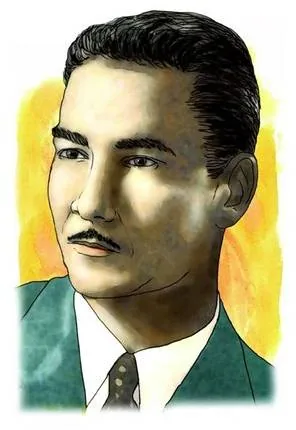
José Martín Félix de Arrate is undoubtedly one of the most important authors of the period. He ventured with relative success into various literary genres; among his works are the tragedy "El segundo robo de Elena" (The Second Theft of Elena), the "Novela al ínclito mártir San Ciriaco" (Novel to the Illustrious Martyr Saint Ciriaco), and "Llave del nuevo mundo, antemural de las indias occidentales. La Habana describa: noticias de su fundación, Aumentas y estado" (Key to the New World, Bulwark of the West Indies. Havana Described: News of its Founding, Growth, and State).
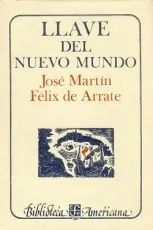 His historiographical texts clearly demonstrate the use of a considerable amount of information, although this information is filtered according to his interests. His account of the Spanish conquest only superficially addresses the cruelty and extermination of the natives, a phenomenon viewed solely from an economic perspective, since it would have been cheaper for the indigenous populations to reproduce than to transport enslaved Africans. Similarly, when criticizing slavery, his arguments share this same nature and a more diluted ethical dimension.
His writings do not yet reveal the contradictions between islanders and peninsular Spaniards that would later become antagonistic, and they are permeated with a laudatory tone toward the representative authorities of the Spanish Crown to whom they are generally addressed. Nevertheless, Arrate extols the virtues and exuberance of the land, dwells on the description of native fruits and features of nature, and already refers to “our homeland” from an emotional perspective. Most noteworthy in this regard are his ethological inquiries into the Creoles, whom he characterizes and praises in a way that recalls—indeed, anticipates—the content of José Martí's “Vindication of Cuba.”
In terms of form, his writing breaks with the Baroque and anticipates Neoclassicism by several years, despite its unpolished style, as the author himself described it in the dedication of "Key to the New World…". His poetic work—mostly unknown, except for the texts that appear within other works—did not achieve singular turns of phrase, but it deserves to be noted within the context of the era and the country's limited literary life. The following sonnet appears as the epilogue to the aforementioned historiographical work:
“Here I loosen my pen! Oh beloved homeland,
Noble Havana, enlightened city!
For if it flew so proudly,
it is now just that it withdraws in shame.
If to outline you, revered homeland,
My poorly governed pulse encouraged me,
It does little to withdraw already run,
When it is so much to leave you badly copied.
But even so he has not succeeded in disdaining you;
For if so much of your son is wise and strong
In the arenas of Minerva and Mars
They praise and exalt you, it is well known
that where so many have enlightened you,
I alone will not be enough to obscure you.”
In short, his texts constitute primary documentary sources (further supported by the use of many others, some of which are currently unknown) for reconstructing the history of the earliest colonial period. Many later thinkers and writers would develop in greater depth ideas that were already evident or latent in Arrate's historiographical corpus, thus making him a precursor in this respect.