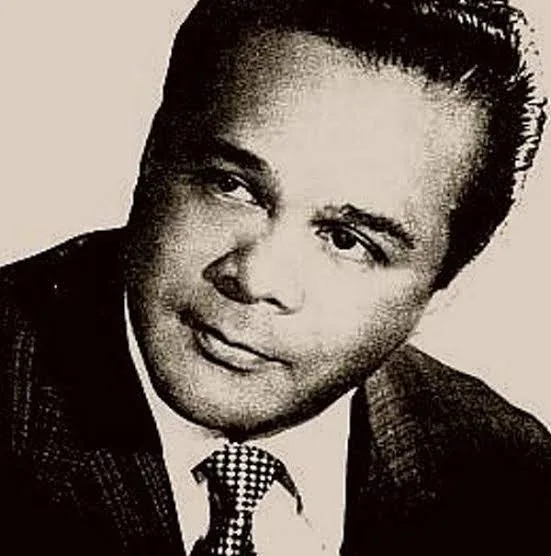
Adalberto Cecilio Álvarez Zayas, known as Adalberto Álvarez, is a brilliant Cuban pianist, composer, arranger, and orchestra conductor. He was born in November 1948, the son of the renowned musician Enrique Fortunato Álvarez (Nené). He enrolled at the National School of Art (Calle 120 between 9th and 13th, Cubanacán, Playa, Havana) in 1966, where he studied until 1972.
I worked at an art school in Camagüey as a professor of musical literature from 1973 to 1978. I began my artistic career as a paila player, later working as an arranger and director of my father's musical group, called Avance Juvenil, in the province of Camagüey.
In 1971, one of his first compositions was released by the Rumbavana ensemble, titled "Con un besito mi amor" (With a little kiss, my love).
In 1978, Adalberto Álvarez organized and founded the group Son 14, which debuted in the province of Santiago de Cuba. The orchestra became a landmark among Cuban orchestras that cultivated Son music. Son 14 presented a different musical concept; without abandoning the roots of Son, it renewed it through contemporary lyrics, orchestrations, and harmonies, which can be observed in their songs since the group's inception.
Adalberto also performed in Venezuela at the Third International Fair of Barquisimeto. There he taught a course on orchestrating dance music, reflecting on Son through recordings by the Septeto Nacional and other Cuban groups.
In 1984, Adalberto decided to form his second group, called Adalberto Álvarez y su Son, which debuted in Santiago de las Vegas. Adalberto served as director and pianist; the group included, among others, Jorge Machado, José Martín, José Fernández, Dagoberto Rodríguez, and Ubaldo Canes.
The orchestra has always focused on the Son style, and has also embraced the challenge of establishing new harmonic and rhythmic changes that faithfully resonate with the dancer. Because of these characteristics, the group quickly captured the attention of both national and international audiences.
Adalberto and his orchestra performed at the Second Salsa Festival, which took place in Spain in 1985. They also performed in various cities throughout the country, including Madrid, Seville, Gijón, and Tenerife. They shared the stage with international music stars such as Eddie Palmieri and Cheo Feliciano.
Around that time, they also traveled to Helsinki to perform at the Hiperia Hotel's Winter Carnival. They also took their music to several universities in Finland. They performed in Berkeley, California. In 1987, they participated in several international festivals, including Salsa'87 and North Sea Jazz in the Netherlands.
In 1990 Adalberto achieved great success with his song A bailar el toca toca, and in 1991 the group took a new direction with pieces like Y qué tú quieres que te den.
Adalberto manages to gather a good number of spectators at his concerts, as evidenced by the 2002 concert at the Palace of Congresses in Paris, where he invited Compay Segundo and which was attended by more than 4000 people.
In 2003, he presented his compact disc, recorded for the Bis Music label, "Para Bailar Casino," at the Salón Rosado de La Tropical (41st and 46th Avenues, Playa, Havana). The disc's main purpose was to revive partner dancing. That same year, he chaired the Organizing Committee of the First International Casino Rueda Meeting, which took place at the Plaza XIV Festival in Matanzas and in Varadero between August 8th and 11th, with the participation of dancers from every continent.
In 2004, Álvarez embarked on an international tour, performing 15 concerts in countries such as Italy, Germany, the Netherlands, Austria, France, and Switzerland. He then performed in Canada at the Festivalísimo event, which is held in Cuba. He played at Club Soda in Montreal, performing a repertoire of his group's most representative songs. Also that year, in the summer, they undertook another international tour in various European countries (Italy, Portugal, Greece, France, Hungary, Spain, and Germany), sharing the stage with Changuito and Tata Güines.
When Adalberto returned to his homeland, he joined the organization of the Matamoros Son Festival, an international project held in the province of Santiago de Cuba. He became the main organizer and Honorary President of these son festivals, whose objectives include keeping the son tradition alive.
In 2005, another international tour took place, culminating in a massive reception in Teramo, Italy, before a crowd of nearly a thousand fans. She was also awarded a plaque in recognition of her work. Later that year, she traveled to Canada with her orchestra for several performances. She also recorded the album "Mi linda habanera," dedicated to Havana.
In 2006, Adalberto received the key to the city of Santiago de Cuba, during the Matamoros Son Festival, for his contributions to the expansion of Son and to Cuban culture and identity.
"A Bayamo en coche" was the song that launched Adalberto's international career as a composer. Among his works are: A bailar el toca toca, A Bayamo en coche, Agua a la candela, A mi manera, Amor en tiempo de merengue, Contradicciones, Chivo quiere que le den candela, Dale como e, Deja la maña noche, Déjala que se vaya, El chévere… y el caballero, El Son de Adalberto, El Son de la madrugada, Ella es una abusadora, Fin de semana es la cita, Loco enamorado, Máquina para bailar, Me voy contigo, Mi amor fugaz, Mi linda habanera, Noche sensacional, Para bailar casino, Pero báilalo, Si no la quieres, déjala que se vaya, Son para un sonero, Un pariente en el campo, Ya no queda nada, Y qué tú quieres que te den, Y solamente tú.
The songs composed by Adalberto are part of the repertoire and discography of important musicians such as: Papo Lucca, Oscar D' León, Roberto Roena, Willy Rosario, Andy Montañés, Ismael Quintana, Juan Luis Guerra y la 440, Eddie Palmieri and Gilberto Santa Rosa among other distinguished salsa musicians.
His discography includes more than 20 albums that are already classics in Cuban musical history.
Adalberto Álvarez is known as El Caballero del Son (The Gentleman of Son), a nickname he has earned for his innovations and contributions to the genre. Among his fundamental contributions to Cuban music is his modernization of Son.
He has received numerous national and international awards and recognitions: Cubadisco Award 2002 in the Current Dance Music category, Cubadisco Special Award 2003, "José María Heredia" Recognition Plaque and the Key to the city of Santiago de Cuba 2006.