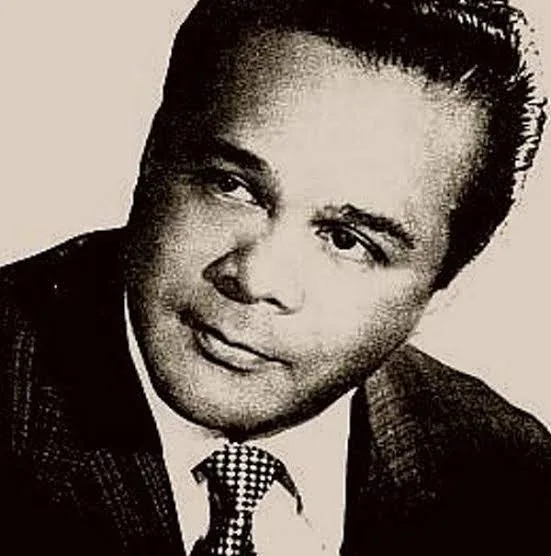
Ignacio Jacinto Villa y Fernández, known to all Cubans as Bola de Nieve, was a pianist and composer. He was born in the town of Guanabacoa, Havana, on September 11, 1911.
He possessed a highly personal musical style, managing to communicate his message ingeniously, in the manner of old storytellers. When he sang, he sometimes recounted ancient tales, featuring different characters whom he embodied magnificently, for which he prepared like an actor. He studied and matured daily.
Bola de Nieve began his artistic life acting in a silent movie theater in Guanabacoa. He studied music from the age of eight at the Mateu Conservatory in his hometown, and continued his studies at other music centers in Havana.
On January 19, 1933, he traveled to Mexico as the pianist accompanying Cuban singer Rita Montaner; there they performed in a variety show, and he became known as Bola de Nieve. At the Politeama Theater, he began his artistic career as a soloist, singing "Bito Manué, Tú no sabe inglé" with music by Emilio Grenet and lyrics by Nicolás Guillén.
From Mexico, she traveled to the United States accompanied by Rita Montaner, Pedro Vargas, the Campos sisters, Enriqueta Faubert, and Juan Martínez Casado. Upon returning to Mexico, she performed on April 30, 1934, at the Máximo cinema with Ernesto Lecuona.
In 1935 he returned to Cuba, and was hired to work in Ernesto Lecuona's Company, with which he performed in Havana theaters of the time, there Bola and Lecuona performed on two pianos El cabildo de María la O and Arrullo de palmas, both musical pieces by maestro Lecuona.
In 1936, Bola de Nieve traveled to Argentina as part of the Lecuona Company's cast. He performed on several programs for Radio Esplendid and Radio Mundo in Buenos Aires, and participated in the film Adiós, Buenos Aires.
In 1937 he toured Argentina, Chile, and Peru. In Peru, he performed at the Municipal Theater. In 1941, he returned to Argentina and was celebrated in Ernesto Lecuona's revue, "La Habana en Buenos Aires," at the Avenida Theater. In 1943, he performed at the National Conservatory of Music in Buenos Aires.
In 1947, Ignacio Villa was hired by Conchita Piquer's company, with which he participated in a variety show at the Lara, Zarzuela, and Poliorama theaters, and in the cities of Zaragoza, Seville, Córdoba, and Jerez de la Frontera. In 1948, Ernesto Lecuona arrived in Spain with his artistic talent, and Bola de Nieve joined him.
That same year (1948), Bola traveled with Lecuona's company to the United States and performed at Café Society in Philadelphia, alongside singers Lena Horne, Teddy Wilson, Art Dayton, and Paul Robeson. He later performed at the Puerto Rico and San Juan theaters in New York City, with Libertad Lamarque, Lou Walter, Tony Gary, Eva Garza, and Fausta Curbelo. He participated in the Cuban music concert at Carnegie Hall in New York, and critics compared him to the French singer Maurice Chevalier and the American singer Nat King Cole.
In 1950, Bola de Nieve continued hosting the radio program "Gran Show de Bola de Nieve" on CMQ, where he also conducted the orchestra. Between 1951 and 1958, he toured France several times, performing for the first time at Chez Florence in Paris. In 1953, he performed in Copenhagen; in 1956, he gave a recital at the Hall of the Americas of the Pan American Union in Washington, D.C., where he inaugurated the institution's summer concerts. The press hailed him as a "master of Cuban song." He visited Italy in 1957 and later Denmark.
From 1961 onwards, Bola de Nieve toured the Soviet Union and the People's Republic of China. In 1964 and 1966, he was hired to perform at the Mexican restaurant Cardini Internacional, and simultaneously appeared on television programs such as Revolución Musical Nescafé and Variedades Gerber Silvia.
After his return to Cuba, he gave a recital for the delegates to the Rubén Darío Encounter, organized by Casa de las Américas.
Although Bola de Nieve has been compared to artists such as Maurice Chevalier and Nat King Cole, his true and greatest influence was the Cuban pianist María Cervantes; from her he took the rhythmic elements and the way of accompanying himself on the piano.
Ignacio Villa sang in several languages and was a unique performer. Among his principal works are:
• Little stream of my house,
• Oh, love!,
• Oh, come dove, come!
• Becqueriana
• Let me remember
• Drumi Mobila
• Perfect Mother
• Don't let me forget you
• Why did you let me love her?
• If you could love me.
Important figures of Cuban and world culture have written about this masterful Cuban musician:
"Bola de Nieve married music and lives with it in that intimacy filled with pianos and bells, throwing the keyboards of heaven over his head. Long live his earthly joy! Hail to his sonorous heart!"
Pablo Neruda
"Bola, in addition to his musical culture, has a well-developed literary culture. His conversation (not public, since he is not a talker of that kind, but the usual kind among friends) is always sprinkled with wit, thus validating the classic observation that skill in witty remarks is a sign of great intelligence."
Nicolás Guillén
This great Cuban musician died in Mexico City on October 2, 1971, was transferred to Cuba and buried in his hometown.