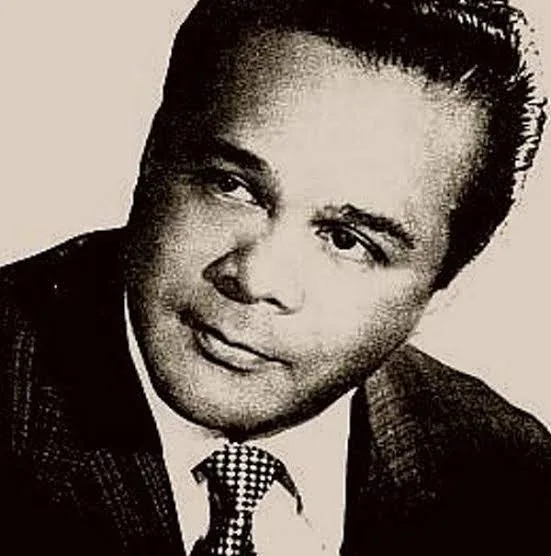
Rafael Lay Apesteguía was born in 1927 in the city of Cienfuegos. He began his musical studies at the age of nine, taking music theory, solfège, and violin lessons with Professor Sara Torres López. At the Alejandro García Caturla Conservatory in Havana, he studied with Dolores Torres, Félix Guerrero, and Alfredo Diez Nieto, and completed his musical studies there.
He was a member of Agustín Sánchez Planas's orchestra, and he organized and directed the Cienfuegos Choir and Chamber Orchestra. In 1940, while still a teenager, he joined the Orquesta Aragón, where he was hired as second violin.
Rafael Lay took over as director of the Orquesta Aragón in 1948, replacing Orestes Aragón. He moved to Havana with the orchestra in 1955.
He conducted the Orquesta Aragón on various national and international stages, including the Teatro Amadeo Roldán (Calzada and D, Vedado, Havana), the Teatro Blanquita in Mexico City, Avery Fisher Hall at Lincoln Center in New York, the Tchaikovsky Conservatory in Moscow, the Olympia Theatre in Paris, Expo '70 in Osaka, Japan, and the People's Palace in Conakry. He also shared the stage with significant musicians such as Dámaso Pérez Prado.
As director of the Orquesta Aragón, he demonstrated his talent in accompanying countless singers, whom he skillfully guided to achieve a flawless performance. He toured countries including: Panama, Venezuela, Colombia, Costa Rica, Guatemala, Chile, Mexico, Guyana, the United States, France, Spain, Poland, East Germany, the Soviet Union, Bulgaria, Romania, Hungary, Czechoslovakia, Japan, Conakry, Congo (Brazzaville), Guinea, Egypt, Algeria, Tanzania, Mali, Sierra Leone, and Angola.
The Orquesta Aragón, under the tutelage of Rafael Lay, eventually reached the pinnacle of popularity in Cuba, and also achieved great international prestige for its high level of performance and outstanding stage presence, obtaining notable international recognition.
Lay was not only an excellent violinist and orchestra conductor, but also an arranger and a prolific composer. He composed more than 40 works in various genres of Cuban popular music, many of which achieved great popularity. Among his most outstanding pieces are "Cero codazos," "Envidia," and others.
He was a truly virtuosic violinist who performed works by the German composer Johann Sebastian Bach, accompanied by the Popular Concert Orchestra, conducted by the composer Alfredo Diez Nieto. With this same ensemble, he conducted Piano Concerto No. 1 by the German composer Felix Mendelssohn, with Frank Emilio as pianist, and Symphony No. 8 by the German composer Ludwig van Beethoven.
In 1967, Lay conducted the Gonzalo Roig Popular Concert Orchestra; later, he founded and directed the Brindis de Salas string orchestra. He served as a harmony professor at the Ignacio Cervantes School of Professional Development. He was a music advisor to the Ministry of Culture and a member of the National Evaluation Commission.
For his arduous artistic work, he received several medals and the National Culture Order. Rafael Lay died in a traffic accident in August 1982 in the province of Cienfuegos.
11- Cuban Music in the 20th Century (1959-1980).
After the revolutionary triumph, Cuban music continued its evolution based on purely Cuban elements. This process brought about changes in the musical landscape. Existing genres of Cuban music, such as symphonic music and choral works, which had previously lacked exposure, were given greater recognition. It was during this period that the National Symphony Orchestra was founded. New expressions emerged in Cuban music, and musical experiments took place, often using percussion as a foundation, resulting in certain transformations in musical sound.
The 1960s were marked by the Havana Musical Theater, with prominent figures such as Alfonso Arau, Tony Taño, and Bobby Carcasés. Vocal quartets enjoyed a golden age in Cuban music, including Los Bucaneros (1960), Los Modernistas (1960), Los Zafiros (1962), and a host of other vocal groups that flourished in the Cuban music scene.
During this decade, new rhythms were created in Cuban popular music that revolutionized popular dance, such as the Dengue, Changüí-Son, Pacá, Mozambique, and Pilón. It was in the late 1960s and early 1970s that the Nueva Trova movement emerged in Cuban song, strongly represented by important Cuban singers and composers such as Silvio Rodríguez, Pablo Milanés, Noel Nicola, Sara González, and Vicente Feliú, among others.
In 1967, the Varadero Popular Song Festival was organized and held. The Cuban Orchestra of Modern Music was founded, becoming a favorite among young people of that era. Directed by Maestro Armando Romeo, it included many talented young musicians among its members.
In the 1970s, the ICAIC's Grupo de Experimentación Sonora (Sound Experimentation Group) emerged, leaving us with remarkable works and film scores. Cuban musical figures such as Leo Brouwer, Carlos Fariñas, and Juan Blanco also experimented with electroacoustic music, a musical trend of this period. Songo and Salsa were also created during this time.
It is a stage in which many Cuban musical orchestras proliferate, both classical and belonging to popular dance music, among the latter we can mention: Estrellas Cubanas, Conjunto Estrellas de Chocolate, Pacho Alonso y sus Pachucos, Orquesta Revé, the duo Los Compadres, Los Van Van de Juan Formell and Irakere, of maestro Chucho Valdés, among many others.
There also emerged groups that became particularly popular among Cuban youth: Manguaré, Moncada and Mayohuacán, with a production based on Latin American political and folk songs and with an evident emphasis on Cuban Son.
Also during this period, cultural institutions and organizations were created with the express purpose of promoting and developing music education in the country at all educational levels. These included the founding of the National School of Art (120th Street between 9th and 13th, Cubanacán, Playa, Havana) and the Ministry of Culture (2nd Street between 11th and 13th, Vedado, Plaza de la Revolución, Havana). Festivals and competitions emerged, such as the National Choir Festival, which is now held annually as part of the Cuban music scene.